Certification Of Analysis Coa
- For instance, impurities, disparities, or misleading product cases can result in undependable findings.Several labs keep a log of these papers to aid them fix if required later on.Quick referral checklist highlighting the key elements researchers normally examine when analyzing a peptide certification of analysis.Problems in the example could throw off research or pressure laboratories to redo tests, so beginning with solid information from the CoA helps prevent blunders.
Why Does Batch-specific Documents Issue?
Results are recorded in a Cold Storage Certification of Evaluation, available with every item you buy. Comprehend the basic components of peptides, their distinction from healthy proteins, their significance in organic research, and much more. Independent testing eliminates conflicts of rate of interest and reinforces confidence in logical precision. Unforeseen adjustments might indicate deterioration or incorrect storage space.
Usage Documents Extra Wisely
A CoA is a technical paper intended to sustain reproducibility and clinical honesty. This web content is for educational and informational functions just and is not a replacement for specialist clinical recommendations, medical diagnosis, or therapy. Always get in touch with a qualified healthcare provider prior to making any type of health-related choices. Hefty metal analysis screens for poisonous aspects including lead, mercury, arsenic, and cadmium. Inductively Coupled Plasma Mass Spectrometry (ICP-MS) supplies sensitive discovery of these pollutants at parts-per-billion degrees. Please inspect the relevant product web page to view the latest Certificate of Evaluation PDFs for current batches.
Glp-2 Tz Research Study Review: Structure And Laboratory Interest
COAs are offered study documentation and openness just. Artificial SPPS production, regulated procedures, and research-grade handling minimize contamination threat. Independent testing can provide added peace of mind, yet it is just meaningful when supported by proper upstream controls. Your individual information will be made use of to support your experience throughout this web site, to handle access to your account, and for various other purposes explained in our privacy plan. A missing out on examination date weakens the useful worth of the record. Buyers require to know when the analysis was performed in order to understand whether the report shows up relevant and appropriately preserved.This allows scientists to track and contrast results regularly across different researches. To place it another method, without such confirmation, the danger of endangered study results boosts dramatically. As an example, impurities, inconsistencies, or deceptive product insurance claims can cause unstable findings. Because of that at Blend Peptide, we make it a concern to provide complete openness. For example, a peptide example that is kept chilly and completely dry will certainly typically do as anticipated, however one that defrosts and ices up a couple of times can change. By matching excellent storage with careful review of the CoA, laboratories can stay clear of shocks that could decrease a job right after the brand-new year.
Buyers must look past look and concentrate on whether the info is specific, readable, and deducible. Food and Drug Administration and are not meant to detect, deal with, heal, or prevent any condition. A COA ends up being much more valuable when it belongs to a more comprehensive transparency structure. If you want to comprehend exactly how Luxara Labs comes close to laboratory paperwork, the toughest next actions are the Transparency Center, Lab Outcomes, and Pureness Criteria. They support the COA with pages that discuss just how to review it, what pureness implies, how paperwork matches the bigger trust fund photo, and where viewers can find associated lab sources.A COA supplies quantifiable lab information instead of basic descriptions. Scientists can assess the testing results straight, permitting them to assess the logical characteristics of the substance. This dedication to quality assurance not just safeguards the integrity of research study however additionally boosts the trustworthiness of the clinical job performed using our items.
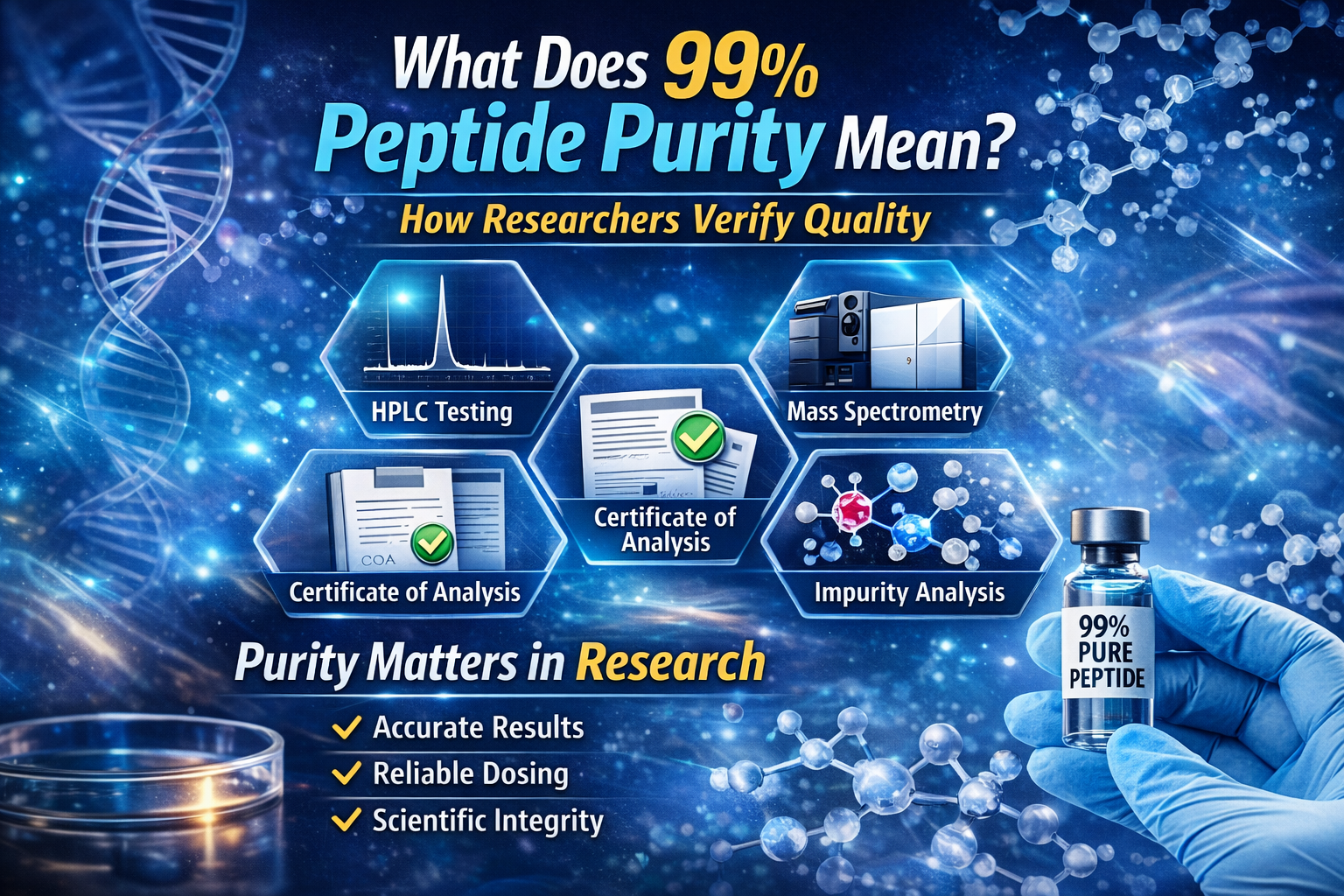
Review of the laboratory process utilized to verify peptide study substances via logical testing and Find more info documented certifications of analysis. A peptide CoA aids verify the product's identity, revealing vital information like pureness and test results. This ends up being much more vital in January, when lots of labs go back to complete schedules after the holiday break. With study rebooting, having appropriate paperwork in position means less time double-checking and even more time focused on the research study itself. A legitimate CoA consists of batch-specific information, logical methods, chromatograms or spectra, screening days, research laboratory certification, and third-party verification where appropriate. Distinctions between third-party laboratory results and reported pureness are generally as a result of variations in analytical approach.