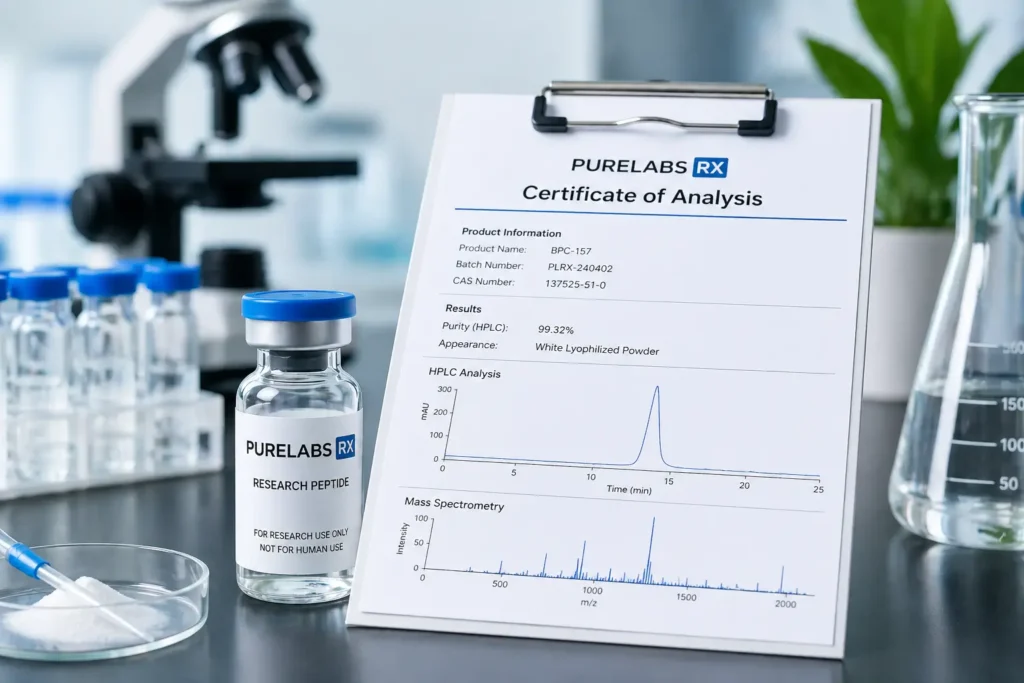
Bpc157 & Tb500 Blend 10mg 10mg 99%+ Pureness, Coa Confirmed
Bpc-157 Vs Tb-500: Which One Really Functions? Dr Mckennas Orthopedics And Biologics Researchers at first separated this peptide while studying how the stomach safeguards itself from ulcers and other injuries. BPC-157 is understood for its anti-inflammatory buildings and its capability to advertise recovery in the intestinal tract. Huemn's Healing Peptide Blend incorporates three of one of the most investigated recovery peptides-- BPC-157, TB-500, and KPV-- to speed up recuperation, lower swelling, and support full-body repair.
Does BPC-157 assist arthritis pain?
A peer-reviewed write-up (Lee et al., Different Treatments in Health & & Medicine, ~ 2021) defines: 12 people with chronic knee pain. Treated with intra-articular BPC-157, frequently incorporated with TB-500. 7 of 12 reported symptom renovation lasting a number of months.
As a result, scientists might observe minor Pharma Grade peptide professionals packaging variants, including differences in vial caps. Chameleon Peptides offers study compounds solely for lab and logical functions. BPC-157 may call for more constant application due to its shorter half-life. Negative effects of TB-500 are unusual yet can include exhaustion or short-term state of mind changes. As with BPC-157, making sure the peptide's purity and correct storage space is essential. Huemn provides Recuperation Peptide Blend (BPC-157/ TB-500/ KPV) therapy in Houston, serving clients from The Levels, Vintage Park, Cypress, and bordering locations seeking innovative immune and long life assistance. While animal research studies recommend security, long-lasting human studies are doing not have. As a result of the absence of FDA approval and well-known application standards, the info provided is based on anecdotal reports. Constantly talk to a healthcare provider before thinking about peptide treatment. BPC 157 has not been approved for human therapeutic usage by significant governing bodies like the FDA or the united state . It continues to be a study chemical, and its usage in human beings is mostly limited to scientific researches, though it is not globally prohibited.
Tb-500 (thymosin Β4 Fragment, Mw 4963
Quad Recovery Blend stands for a scientifically-designed multi-peptide formulation that incorporates 4 clinically-studied healing substances into a single thorough procedure.Each vial contains exactly calibrated doses of TB-500, BPC-157, KPV, and GHK-Cu functioning synergistically for detailed recovery and regeneration.TB-500 is a synthetic version of a naturally happening protein called Thymosin Beta-4 (Tβ4).
TB-500 is a synthetic peptide related to thymosin β4, an actin-binding healthy protein. In the literature it is investigated in vitro for actin sequestration and cell-migration designs. Its molecular weight is greater than three times that of BPC-157, so both peptides sit far apart on a chromatogram and are simple to fix and evaluate independently. Quad Healing Blend stands for a scientifically-designed multi-peptide formulation that combines 4 clinically-studied recovery substances into a single extensive protocol. Healing is an important part of remaining active, whether you are educating on a regular basis, taking care of an injury, or just attempting to maintain your body relocating comfortably.
What Is Tb500?
Therefore, research laboratories can gather clear and repeatable information across several study stages. → Both peptides are usually considered well-tolerated in preclinical researches, yet mild injection-site reactions, nausea, lightheadedness, or uncommon sensitive responses have actually been reported. → Some methods match them, with TB-500 supporting systemic recuperation and BPC-157 targeting regional tendon/ligament recovery. Although both TB-500 and BPC-157 are generally regarded as well-tolerated in preclinical researches, individuals ought to be aware of potential negative effects. Private response can vary, and all peptide use ought to be kept track of under medical supervision. From a performance-recovery perspective, cell studies recommend BPC-157 can up-regulate the growth-hormone receptor in ligament fibroblasts-- possibly priming tissue for renovating along with rehab. Mechanistically, TB-500's parent peptide (Tβ4) drives endothelial cell migration, tubule development, and angiogenesis, processes essential for granulation cells and perfusion during recovery. BPC-157 advertises new-vessel formation and supports muscle/tendon repair service, with research studies associating its impacts to VEGF up-regulation in vivo and in vitro. By making it possible for endothelial cell migration and tube development, the actin-binding website drives pro-angiogenic task-- a vital step in granulation cells and repair service. All items sold by Pure Health and wellness Peptides LLC are intended for research laboratory and study objectives only. The mix is administered via subcutaneous injection 2-3 times weekly, depending on your specific method. It comes pre-mixed with all 4 peptides in optimum proportions, removing the need to manage several vials, syringes, or injections. You just reconstitute one vial and inject the prescribed dose.
Why Are These Two Peptides Combined Together?
BPC 157 might promote healing and put in protective results through several proposed mechanisms. This peptide is chemically steady, making BPC 157 immune to enzymatic degradation. It can preserve its organic activity even in severe problems, such as during digestion or enzymatic responses. In this blend it is supplied at equal mass to TB-500, the peptide it is most often co-studied with. Injury recovery usually involves lengthy weeks or months of remainder, physical treatment, and in some cases surgical treatment. These mechanisms are studied for their duty in cells blood circulation and recovery reactions. Research study indicates that BPC-157 can act upon numerous interconnected paths associated with cell survival, angiogenesis (formation of new blood vessels), and cellular movement. In animal and lab systems it has actually been observed to trigger signaling networks such as VEGFR2, nitric oxide synthase, and focal attachment kinase facilities, which are relevant to cells repair processes. Both TB-500 and BPC-157 have gained focus in the performance and recuperation area for their regenerative capacity, yet they offer different functions.